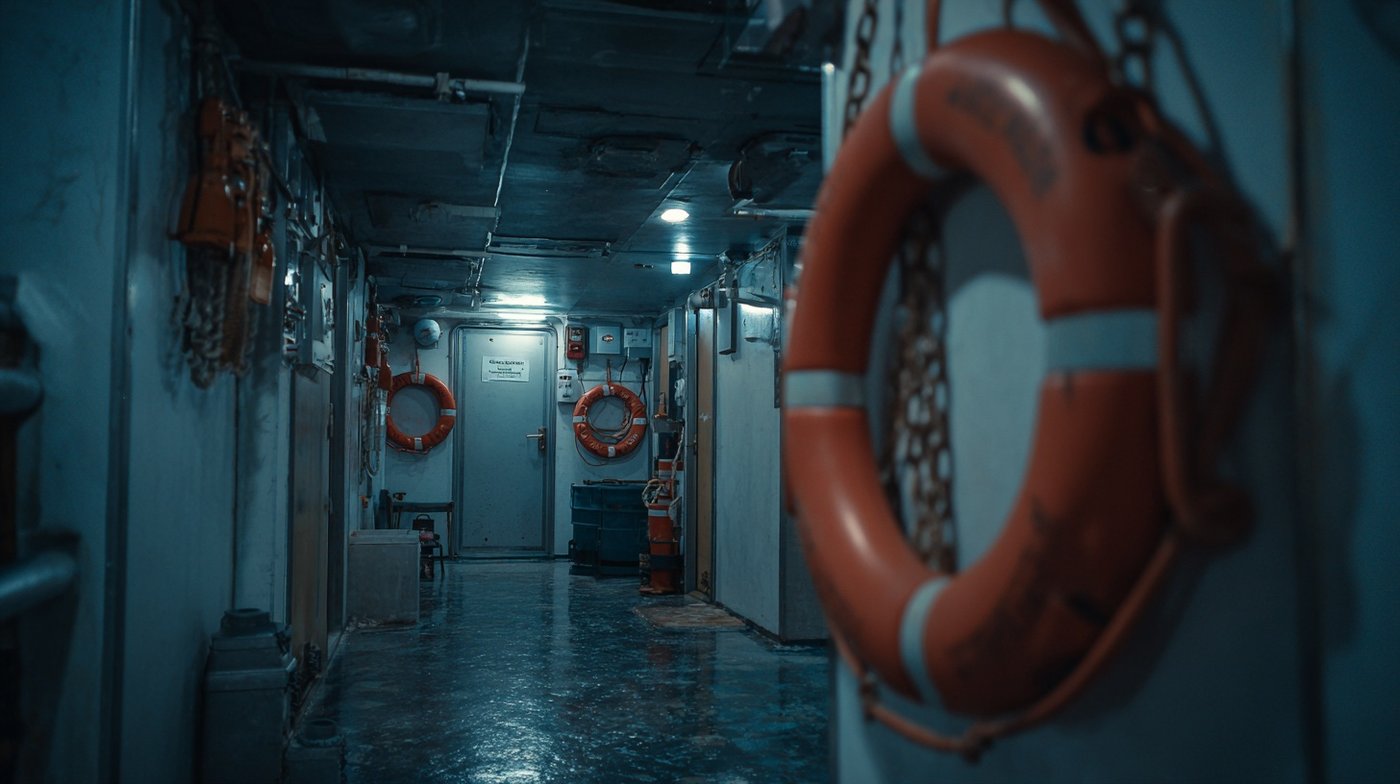
On paper, modern vessels are safer than ever. There are documented procedures in place, certified equipment, and training to ensure the crew is well prepared.
Even so, there exist certain risks of which most maritime professionals are less aware. And they are often quite unintuitive. In fact, intuition might actively work against us, because some of the dangers are literally invisible to the naked eye.
Let us dive into a few unusual hazards that show life at sea can be filled with unexpected dangers, and hopefully leave you a little bit better prepared to watch out for them.
Invisible hydrogen fires
Hydrogen is no longer limited to specialist cargoes. Batteries, fuel cells and emerging energy systems all use the simplest element of the periodic system to great effect.
Hydrogen, however, comes with a special kind of danger. When hydrogen burns, it does so with a flame that is close to invisible in daylight. There may be heat and noise, but no visual clue that a fire is present.
In order to address the possibility of hydrogen fires, detection must rely on instrumentation, exclusion zones and thermal awareness. Eyesight alone is not enough.
Explosions triggered by water jets
Asked to name the most common cause of ignition, most people would likely list water near the bottom. Yet, once high pressure is introduced, this changes.
The danger involves how high pressure water jets may generate an electrostatically charged mist, if the pressure is higher than 50 MPa. This may discharge, and ignite flammable atmospheres.
In other words, you should stay extra alert when cleaning if there is a risk of flammable vapors still being present. Washing tanks or enclosed, poorly ventilated spaces should always be done at a lower pressure.
Too much oxygen
Oxygen deficiencies are quite well-known risks when it comes to maritime safety. But an oxygen surplus is not necessarily a good thing, either.
The common wisdom states if there is no fuel, there is no fire risk. In oxygen-enriched environments, ordinary materials become the fuel.
These environments may occur in a variety of ways. A number of them include:
- Liquid oxygen spills, creating clouds of dense air.
- Leaking vents, pipe connections or flanges.
- Cold oxygen-absorbent materials warming to room temperature.
- Opening oxygen systems under pressure.
While a lack of oxygen is still the main danger onboard, crew should be aware of oxygen surplus as a second-order risk.
Oxidizing wood pellets
The humble wood pellet is not an uncommon type of cargo, and possibly the last culprit anyone would suspect as cause for concern. However, investigation has revealed certain insidious quirks to watch out for.
During transport, wood pellets consume oxygen and emit carbon monoxide as they oxidize. If left in a sealed or poorly ventilated space, the pellets may create a very hazardous environment.
This shows how important it is that atmospheric testing is both routine and multi-gas. Do not just make assumptions based on your intuitive guesses about what cargo is safe.


 Customer support

.svg) myBruusgaard
myBruusgaard