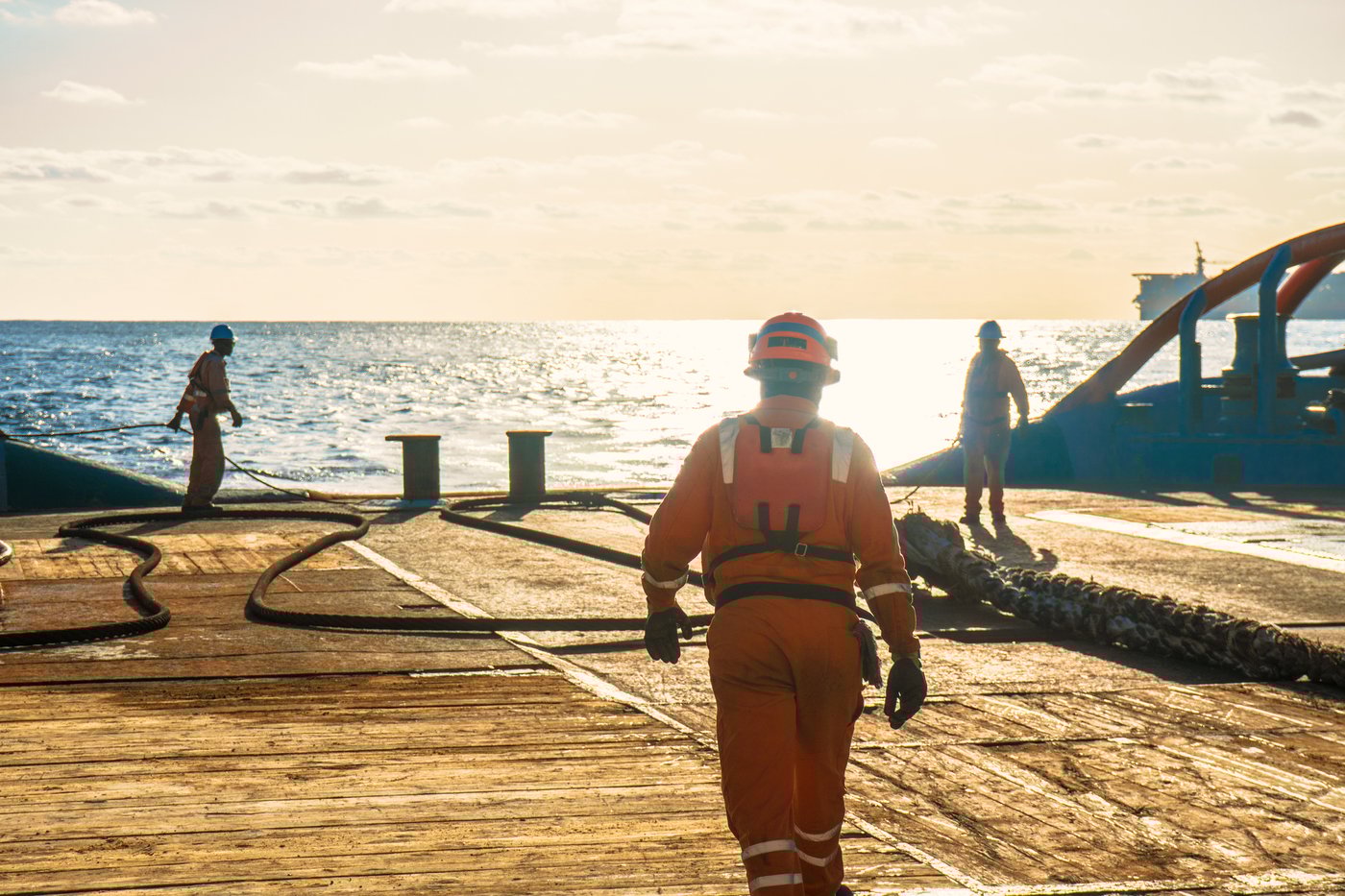
Compliant CO₂ testing starts with proper equipment and operational routines.
The recent IMO reinforcement of enclosed space entry expectations includes CO₂ as a new parameter in the pre-entry atmospheric testing. This calls for not only correct measurement, but also clear routines and proper documentation that support the Master’s decision before issuing a pre-entry permit.
The operational risk behind this is well understood: CO₂ can accumulate even when oxygen levels appear normal, making direct measurement essential.
But the revision of Resolution A.1050(27) also raises a practical question for many officers: How do we ensure correct CO₂ testing on board?
Recommendations for reliable CO₂ testing
Before breaking it down, the recommendation can be summarised simply: Vessels should have proper, certified equipment, including MED-apprved devices where applicable, handled by trained crew members following clear, documented routines. The sections below outline what that means for your operations.
1. A sensor that measures CO₂ in the correct range
To assess conditions against the 5,000 ppm limit (0.5%), the detector must operate in the ppm range and provide reliable resolution near this limit. Sensors designed for CO₂ detection in the percent range may not be suitable for enclosed-space pre-entry assessments, as they are generally designed and calibrated for higher concentration ranges and may therefore lack sufficient resolution near the operational limit of 5,000 ppm.
2. Alarm values that align with enclosed space entry
Alarm setpoints must be aligned with the 5,000 ppm limit to support accurate pre-entry decision-making. Alarm setpoints above 0.5% CO₂ cannot be considered acceptable for enclosed-space pre-entry decision-making. In such cases, the alarm cannot be regarded as a valid pre-entry safety measure and would not meet the expectations of flag, class, or vetting inspections.
3. Calibration gas in the correct concentration range
Calibration must be performed with a gas that matches the instrument’s ppm range. Percentage-level mixtures cannot calibrate a ppm sensor, and will place it outside its correct operating span.
4. Crew competence and testing routines
Correct CO₂ testing depends on crew competence and predictable routines. Personnel must be able to zero and bump-check the detector, take measurements in the correct sequence, interpret values near the limit, and record the results in line with procedures. The updated IMO guidance emphasises training as a critical element of enclosed space compliance.
5. Documentation that can be retrieved when needed
Calibration records, certificates, and logged pre-entry readings must be accessible for audits, vetting, and internal reviews. A clear documentation structure supports both compliance and operational oversight and helps the Master make informed permitting decisions.
Supporting compliant CO₂ procedures
For vessels working within The Bruusgaard System (TBS), the strengthened focus on CO₂ essentially means business as usual. The system already integrates equipment control, calibration routines, documentation, and crew handling into a single predictable process, so the additional attention to CO₂ fits naturally into established workflows.
Crew competence is also supported within the system. We have recently launched myBruusgaard, an online portal for training, testing, and qualifying crew in the use of gas detectors. This helps ensure that personnel understand the equipment and maintain stable routines on board, thereby strengthening compliance with enclosed space procedures.
TBS therefore provides a controlled environment for CO₂ testing that aligns with the expectations set by the updated IMO guidance, without introducing unnecessary complexity to the vessel’s daily operations.


 Customer support

.svg) myBruusgaard
myBruusgaard